
About 300 fintech firms are under investigation by the ED for allegedly partnering 38 non-banking financial companies for predatory lending practices to charge borrowers high interest rates.

The income-tax department may make a permanent account number (PAN) mandatory for cryptocurrency investors, in line with the demat account rules for stock market transactions, according to two people privy to the discussion. At present, disclosure of crypto holdings and related gains is voluntary. If tax authorities go ahead with the PAN mandate, crypto exchanges will have to furnish a statement of financial transactions (SFT) before the income-tax department.

Having observed variations in capital gains tax computation, the revenue department is working on a mechanism to analyse futures and options (F&O) trade data and pre-initial public offering (IPO) transactions. "The directorate of I-T systems is working on certain risk-assessment parameters to access the data, which could be on the basis of buying and selling prices of shares in F&Os, variations in margins, fair market value versus IPO prices, etc. "The idea is to segregate and process the voluminous data on equity derivatives for effective use," said a senior government official privy to the plan.

An additional criterion in mergers and acquisitions (M&As) may require digital businesses to secure approval from the Competition Commission of India (CCI), the anti-trust regulator. The government is set to introduce a minimum threshold "transaction value" of Rs 2,000 crore (around $250 million) for any deal as a criterion for notification to the anti-trust regulator if the entity being acquired has substantial operations in India. The new criterion is learnt to be part of the proposed amendments to the two-decade-old Competition law, which is expected to be tabled in the ongoing monsoon session of Parliament.

The faceless authority has suggested a host of changes in the assessment process following conflicts and practical difficulties raised by taxpayers since the new regime was introduced. On August 3, the National Faceless Assessment Centre issued a set of standard operating procedures (SOPs) to address several anomalies in the regime. The faceless centre, constituted by the Central Board of Direct Taxes, is the nodal authority and works as an interface for the faceless regime.

Union Finance Minister Nirmala Sitharaman on Tuesday said the mass consumption items such as pulses, wheat, rice, flour, and curd will not attract the 5 per cent goods and services tax (GST) when sold loose, and not pre-packed or pre-labelled. The clarification came amid protests and widespread criticism by Opposition Members of Parliament over foisting GST on daily-use essentials and subsequent price rise. The all-powerful GST Council, chaired by the Union minister, had last month decided to impose GST on some mass consumption items to simplify the rate structure, which came into effect on Monday.

'We revolutionised the system in a manner so that the chances of leakage will be much lower than it was in the beginning.'
A sharp fall in the price of Bitcoin and other cryptocurrencies is another hard blow to the already sinking cryptocurrency market in India. Global and domestic prices have been on a downward trail since November last year when Bitcoin prices hit a peak of close to $68,000 in international markets. The recent past has seen a much sharper fall in the price of the leading cryptocurrency, Bitcoin.

The Central Board of Direct Taxes (CBDT) has issued detailed guidelines on facilitating tax deducted at source (TDS) on virtual digital assets (VDA) or crypto assets, under which date of transfer and mode of payment will have to be specified. From July 1, TDS of 1 per cent will be levied on payments towards virtual digital assets or cryptocurrencies beyond Rs 10,000 in a year, as the Finance Act 2022 has introduced Section 194S in the income tax (I-T) Act. The department has explained different scenarios through six questions to remove difficulties.

Authorities will allow the country's taxpayers to access the mutual agreement procedure (MAP) for cross-border disputes. This is even if they had settled the case under the direct tax dispute resolution scheme - Vivad se Vishwas - without deviating from the outcome of the scheme, said the Central Board of Direct Taxes (CBDT) on Monday. However, non-resident taxpayers, who opted for the resolution scheme, cannot go for MAP on the same issue, it clarified. MAP is an alternative dispute resolution mechanism under the tax treaties where competent authorities of two countries enter into discussions to resolve tax-related disputes.

The GoM is likely to submit an interim report to the Council on pruning the list of items that at present do not attract the levy.

According to the CBDT, if a social media influencer retains a product from the manufacturing company after using for the purpose of rendering service, then it will be treated as a benefit/perquisite under newly-introduced Section 194R of the IT Act.

The Securities and Exchange Board of India (Sebi) could soon issue interim orders imposing a market ban on the two former fund managers of Axis Mutual Fund (MF) for suspected front-running of trades, said people with knowledge of the development. "The market regulator has gathered prima facie evidence that demonstrates that the duo has violated the integrity of the market. "While a detailed investigation is still pending in the matter, Sebi could take action under Section 11 (4) to prevent further harm to the investors and the securities market," said a source.

The government expects indirect tax collection to be lower than the Budget Estimate (BE) of Rs 13.38 trillion this fiscal year, despite prospects of netting goods and services tax (GST) in large amounts, Revenue Secretary Tarun Bajaj has said. "Indirect tax collection may see lower realisation than budgeted on account of cuts in excise and customs duties. "We could see a shortfall of about Rs 1.5 trillion on account of those," he told Business Standard.

Ahead of the first due date of advance tax payment on June 15, the government is likely to release guidelines on what will be covered within the ambit of virtual digital assets (VDA). To remove any ambiguity in the recently established tax framework for asset holders, the Central Board of Direct Taxes (CBDT) is currently preparing guidelines, said government officials in the know. The apex direct tax body will define non-fungible tokens (NFTs) and whether or not they fall within the purview of VDA.

Ashok Kumar Gupta, chairman of the Competition Commission of India (CCI), has never minced words while talking about the giant technology companies, referring to them on multiple occasions as "centres for entrenched and unchecked dominance". The anti-trust regulator has, in fact, been cracking down on big technology companies such as Google, Apple, Facebook, and others, after they were hauled up by regulators and lawmakers in Europe and Australia. However, in several instances, existing regulations have prevented the CCI from going all out against these companies for anti-competitive activities.

Some states are taking a legal view on the state GST rate and the compensation rules ahead of the Goods and Services Tax (GST) Council meeting, which is likely to be held in mid-June, said people in the know. While the agenda is still being finalised, several states are likely to take up the matter related to GST compensation and may pitch for its continuation beyond the June 30 deadline. States would like to know how they would divide the compensation collected after June 2022 for payment of principal and interest of compensation shortfall borrowing and arrears to states, sources said.
According to sources, the two fund managers allegedly made illicit gains worth Rs 150 crore to Rs 200 crore through front-running.
However, NFTs and Metaverse are in their first-generation (Gen 1) or initial phase and the market is filtering the assets from the point of view of their worthiness. NFTs having real artistic value have not participated as much in the fall. Some innovations are also happening or expected going ahead, which will take this asset class to the next phase.
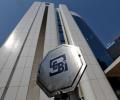
Markets regulator Securities and Exchange Board of India (Sebi) is examining allegations of front-running and other irregularities against a host of domestic fund managers across the asset management industry, said people in the know. Developments at Axis Mutual Fund have prompted the regulator to speed up probe to ensure that there is no drop in confidence in the Rs 39-trillion mutual fund (MF) industry. "We have received complaints against a few fund managers and are looking into possible violations, including those related to code of conduct," said a regulatory source, refusing to divulge names of fund houses as things are at a preliminary stage.
 © 2026 Rediff.com - Advertise with us - Disclaimer - Privacy Policy - Sitemap - Feedback - About us - Terms of use - Grievances